The Path
Every life leaves clues. This is how mine became the work I build today — phase by phase, chapter by chapter.
Foundations
Origins
My parents met on Mykonos. A Greek fortune teller told them they’d marry, have two children, live in a big house, and that there would be a great fire. All of it came true.
I grew up under the soft weight of that prophecy — a backdrop of mysticism layered over an otherwise conventional Northern Virginia childhood.
My father’s American ambition, my mother’s British precision, and the Mediterranean sense that life was something more than its surface — these were the three currents I was born into.
Elementary: The Japanese Immersion
Half my school day was taught in Japanese. Math, science, health — all in a language most American kids never encountered.
In second grade I met the emperor and empress of Japan. I didn’t yet have language for what was being planted, but the seeds were unmistakable: form, precision, reverence, the empty vessel.
Summers and trips back to England with my mother kept the Mediterranean and European threads alive in parallel. I was being shaped by three civilizations before I knew what civilization meant.
Middle School: First Independence
Boy Scouts gave me structure, discipline, and the first taste of leadership through service. I made it to Life Scout.
In sixth grade I traveled to Japan with my father — my first return to the culture I’d been studying since preschool, now as someone old enough to feel the country, not just learn it.
High School: Mastery & Adjacencies
Langley sat next to CIA headquarters — literally on their property. The intelligence world was always in peripheral view, and something about that proximity wired me toward systems of analysis, statecraft, and pattern recognition.
I poured most of my energy into mastering golf. I took my first real job at the McLean family restaurants at fifteen, then later worked as a bar back at my father’s bar — early lessons in how service economies actually run.
In ninth grade I went back to Japan, this time without my parents, with classmates. The independence was formative.
The Threshold: Backpacking Europe
Between high school and college, three friends and I backpacked Europe for a month. No parents, no plan past the next train.
It was the threshold experience — the moment childhood ended and the search began. Cathedrals, train stations, hostels, languages I couldn’t speak, the first taste of being a young man loose in the world.
Whatever was about to happen at Virginia Tech, I crossed into it already changed.
Finding The Way
The college years were the most transformative four years of my life. Each year carried a distinct shift. Treating them as one undifferentiated block flattens what actually happened.
Freshman Year: Entering the System
Virginia Tech was vast, social, and structurally American in a way my European-Japanese-suburban upbringing hadn’t prepared me for.
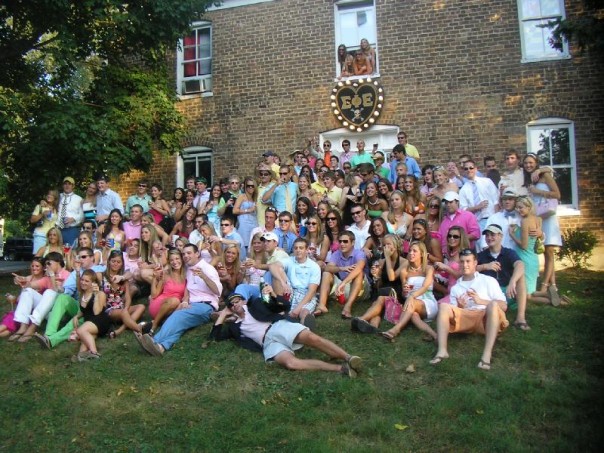
Greek Life appeared as a real architecture — not just parties, but identity, brotherhood, ritual. I pledged. I started learning the social systems from the inside.
Sophomore Year: First Awakening
This was the year that broke the surface.
Fraternity initiation introduced me to ritual as a real technology — not symbolic decoration but a process that actually changes people. I adopted the balanced man philosophy — virtue, diligence, brotherly love — and took it more seriously than most.
Sophomore summer in Ocean City, Maryland, working a crab shack with fraternity brothers, is where I first discovered meditation and yoga. Not as electives. As doorways.
The Quest to Greece
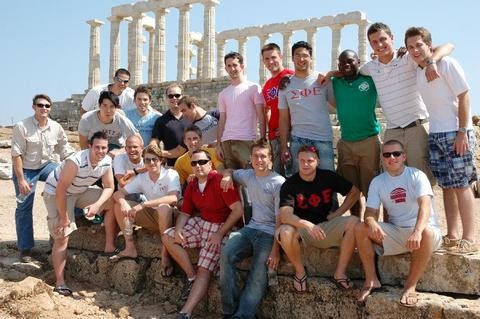
The Quest to Greece — Sigma Phi Epsilon’s pinnacle leadership pilgrimage — closed sophomore year. Ten days, seventeen brothers, ancient sites where philosophy and place still held each other.
Standing in Athens, trying to reconcile Kyoto and Western civilization inside my own head, I had the closing-of-the-loop realization: civilizations are embodied philosophies. Different containers, same underlying inquiry.
Junior Year: Zen in Japan
Junior year I took on the role of chaplain in the fraternity — the spiritual seat, which suited me.
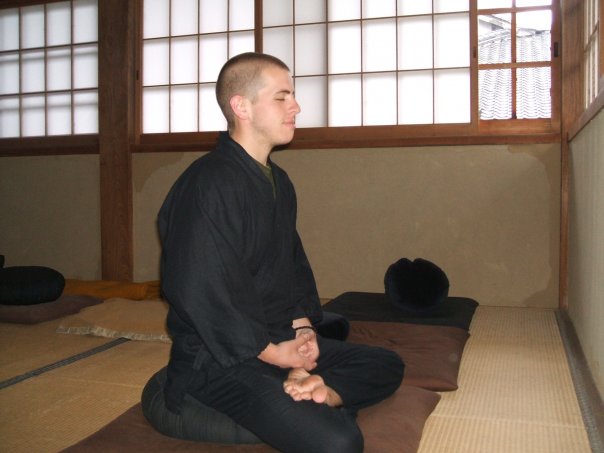
And I studied Zen Buddhism in Japan — formal study of the tradition that had been my background hum since age five.
Senior Year: Finding the Lineage
Summer abroad in Korea — and it was there I was told I would find my teacher. That language stayed with me.
I returned to senior year searching, and the search converged: I found Andrew Cohen, evolutionary enlightenment, and integral philosophy. The pieces I’d been collecting — Zen, perennial traditions, ritual, philosophy as embodied — suddenly had an architecture.
Meanwhile I served on the Inter-Fraternity Council, learning institutional politics at small scale.
Japan
This phase was markedly different from everyone else's post-college trajectory. While my peers entered careers, I went to Japan to train. It deserves its own phase, not a sub-chapter of college.
Uchideshi at Iwama
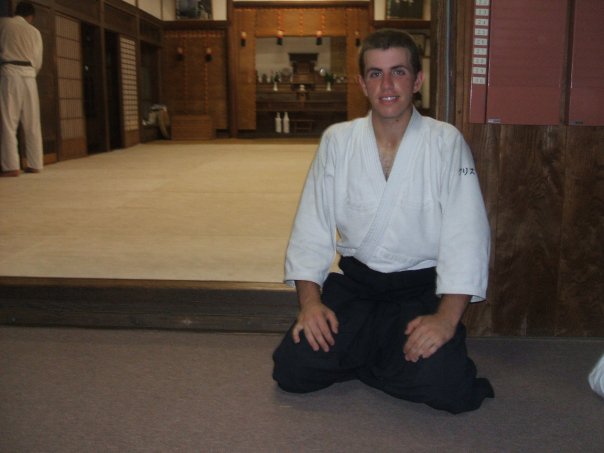
Uchideshi — live-in student. Sweeping the dojo before dawn. Endless repetition until the distinction between philosophy and movement dissolved.
Aikido training under direct lineage, six days a week. The body as a site of intelligence, not a vehicle for the mind. I earned my black belt in Japan.
In parallel I was practicing evolutionary enlightenment with the global online community Andrew Cohen had built, doing retreats by satellite, holding the inner work and the outer training as one continuous practice.
Tuscany & The Return
On the way home from Japan I stopped in Tuscany for the Being and Becoming retreat — the formal close of the Japan chapter and the bridge home.
Then a summer internship at Fox Hollow, the EnlightenNext global headquarters, learning what collective evolution looked like in operating practice, not just theory. I completed a Spiral Dynamics training there.
By summer’s end I knew it was time to start a career. Two years of pure practice had earned me the right to build.
Career & Commitment
The First Career: Sustainability
Clear Carbon was the entry point — climate change and sustainability consulting, the work that felt most aligned with the future I wanted to help build.
Clear Carbon got acquired by Deloitte. I went through Deloitte University and became a professional consultant. Sustainability was the lens; capital markets and corporate strategy were the muscles I was building.
Three long retreats anchored these years and kept the inner work primary:
- Colorado, Shambhala Mountain Retreat Center — where I was on retreat when my mother passed. Losing her on retreat is one of the most defining moments of my life. The practice held me, and the loss reshaped the practice.
- Tuscany — where I went deep with the woman who would become my wife.
- Arizona — what I believe was my last significant retreat with Andrew Cohen.
These were not vacations. They were the spine of the period.
The Bay Area Shift: SunPower
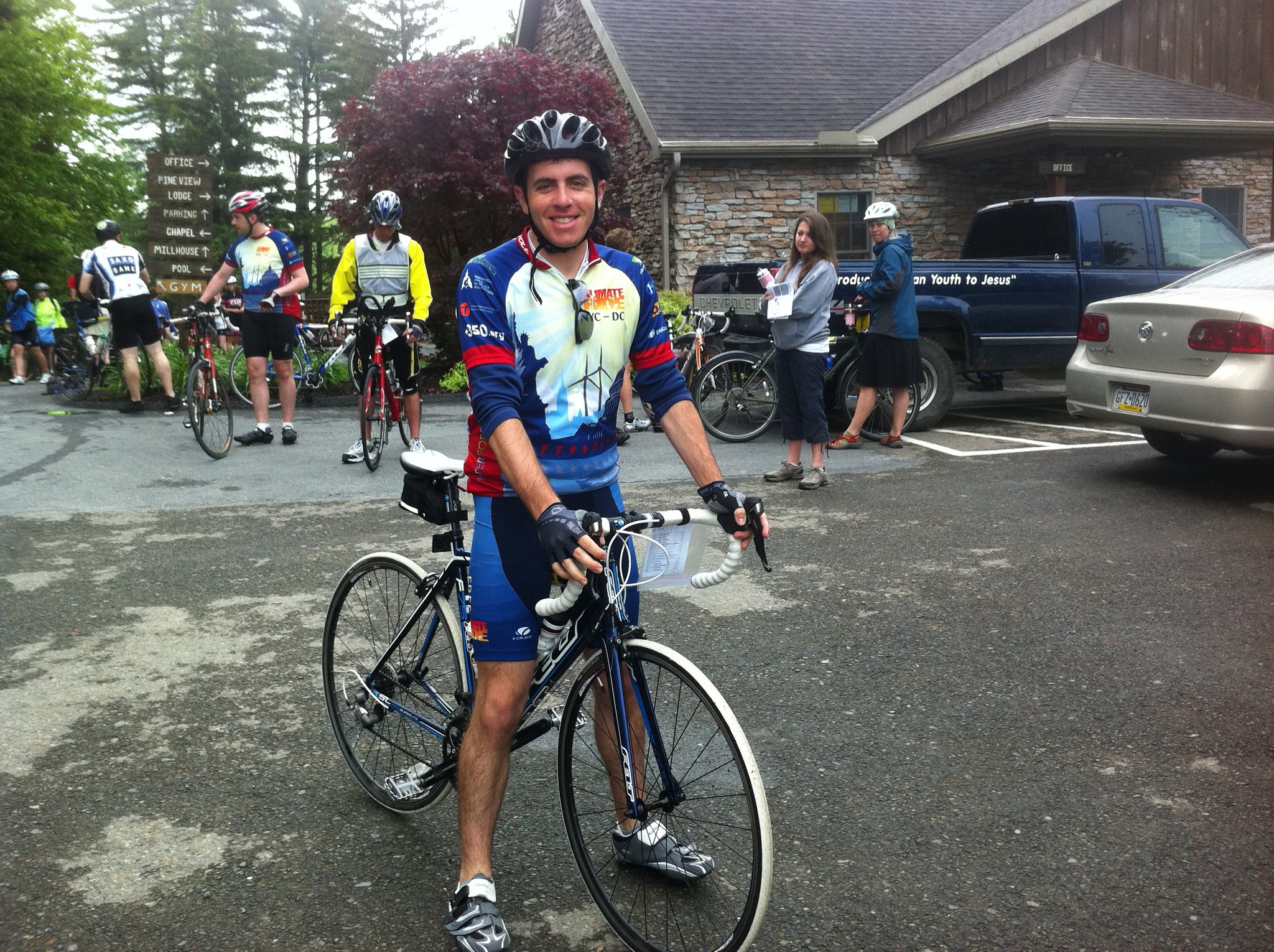
In 2012 my fiancée and I moved cross-country to California. I joined SunPower’s solar energy project finance group.
The transition summer, I lived in the dojo in San Leandro with Pat Hendricks Sensei — the Aikido lineage following me into the new chapter.
SunPower taught me deal structuring, capital raising, and financial modeling at industrial scale. By 2014 I had the muscle to go independent.
Developing Sustainable Real Estate
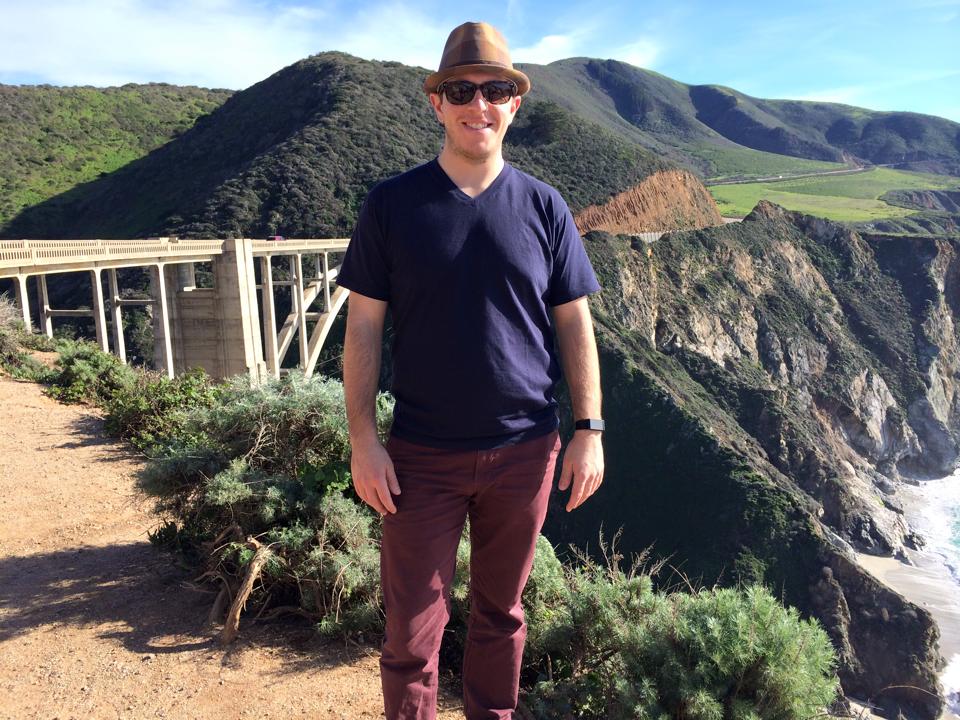
I bet a decade on the proposition that real estate could be a vehicle for the future I believed in. I learned the trade end to end, hit peak momentum, watched the macro environment shatter the thesis, and spent three more years trying to salvage what could be saved before accepting it was time to start over.
SmartGrowth, Chapter One: Fix & Flips
I started SmartGrowth in 2014, the same year my daughter was born. Fatherhood and entrepreneurship at the same threshold.
The first chapter of the business was fix and flips — learning the trade from the ground up, one property at a time.
By 2017 I’d hit peak momentum. I bought the Tesla Model X as a stance — a public statement that sustainable wealth was possible, that the future I’d been working toward since Clear Carbon was real and arriving.
SmartGrowth, Chapter Two: Entitlements
The middle phase was securing entitlements — buying land, navigating planning departments, creating value through approvals rather than construction.
My son was born in 2018. I was learning the deepest leverage point in real estate: rights, not buildings.
SmartGrowth, Chapter Three: Ground-Up
The third chapter was ground-up development — building from dirt. A co-living community. More complex projects.
This was where the philosophy was supposed to fully meet the ground: housing as a vehicle for the future I believed in.
Collapse & Return East
2020 broke everything. Construction defects. COVID disruption. The portfolio fractured.
My wife’s father was dying, and we needed to move back East to be close — a decision shaped quietly but powerfully by the fact that I hadn’t gotten back in time for my mother. I wasn’t going to let that happen twice.
The marriage didn’t survive the return. We divorced in 2021. I moved into the city of Philadelphia and began the long salvage.
The Salvage Years
I spent three years trying to salvage what could be saved. The largest remaining piece was a 128-unit project. I navigated the entitlements through to approval — but the capital markets had closed.
Macro and micro conditions made it impossible to take it vertical. Everyone had lost money.
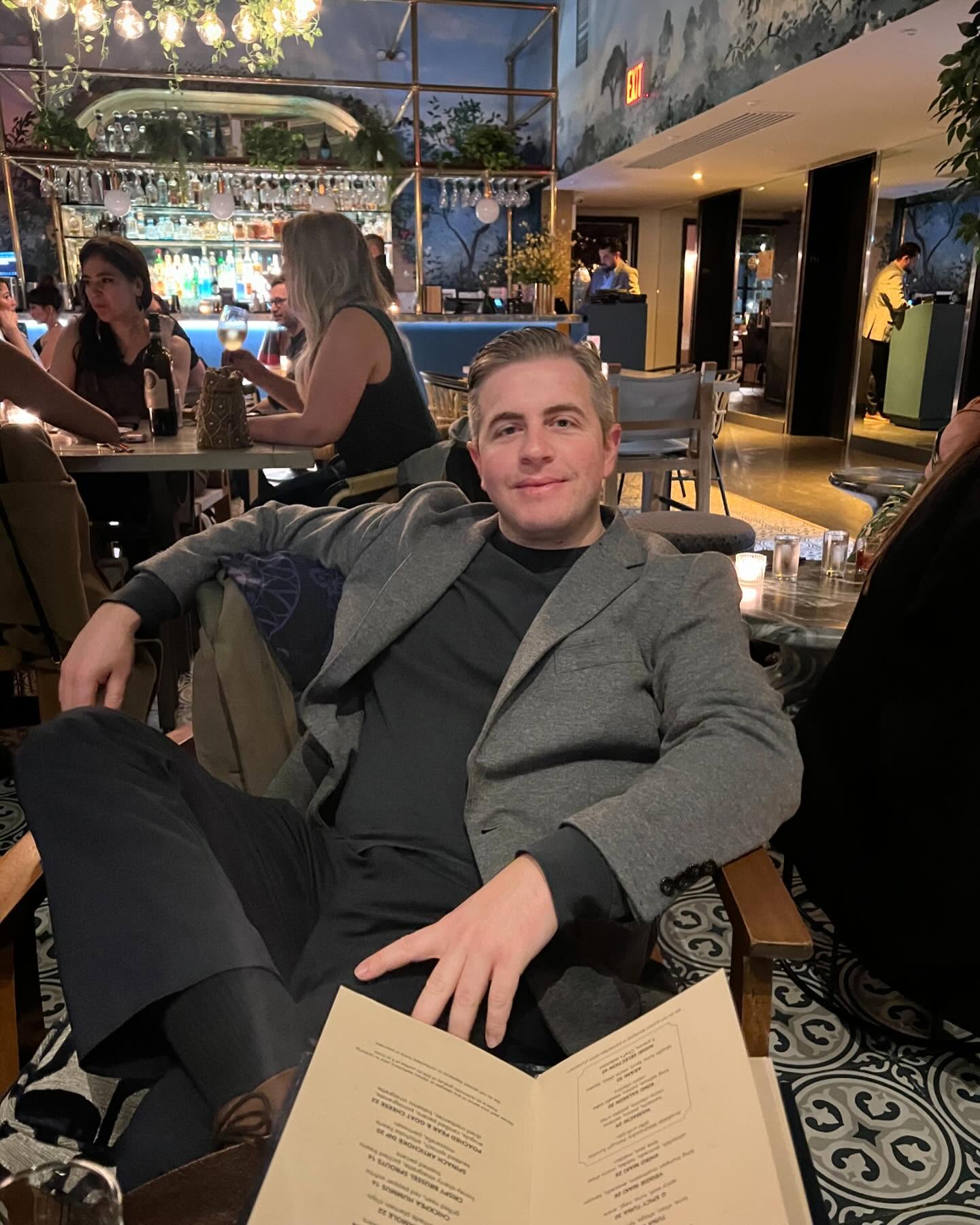
By 2024 it was clear: this chapter was over, and I needed a hard reset to be honest about what came next.
Recalibration
The Wandering: First Principles in the Model X
I converted the Tesla Model X — the same car I’d bought in 2017 as a stance for sustainable wealth — into a camper. Different need, same vehicle.
Then I spent months on the road, moving across the American South — a Florida winter, Mardi Gras and the Super Bowl in New Orleans, Nashville, Austin for SXSW — letting the country tell me what it was actually thinking. Equal parts pilgrimage and field research: hundreds of conversations with strangers about what was really happening, and a deliberate stripping-down to first principles to get clear on what came next.
It was also where I started using AI for everything. With the old structure gone and time finally open, I began running my thinking, my planning, my sense-making through these tools — and felt, for the first time, what they could really do. The next chapter began here, before I had a name for it.
Everything I didn’t need fell away.
The Fishtown Return
Summer 2025 I biked all the Jersey Shore towns, taking on new consulting work as I went.
By fall I’d landed in Fishtown — specifically the Triangle, a neighborhood built on concentric triangles, an unusual energetic geometry I could feel before I could describe.
I set up a dojo space. The Aikido lineage closing the loop one more time, this time as a foundation for the next decade. The intention was explicit: rebuild myself for the Age of AI.
Now: Aetherium, Futurescape, Navigate the Way
The work I’m building now is not separate from the path. It is the path, made useful.
What I haven’t said yet is how. When the last chapter closed, I didn’t just change industries — I rebuilt my entire way of working from the ground up, with AI as the foundation rather than a feature bolted on. Not as an engineer; as an operator who chose to learn these tools deeply enough to build real things with them. The companies, the workflows, the documents and models and decisions — I rebuilt the operating system underneath all of it around thinking with AI, and I do it hands-on, every day.
That’s the part I’m proudest of, and the part most people skip past: not the products, but the rebuild beneath them. It isn’t finished — the work compounds, and I’m still in it. But it’s no longer an intention. It’s how I operate now.
Aetherium is AI for the examined life — the infrastructure I always wanted to exist.
Futurescape is AI-driven real estate intelligence for the built environment — the systems that shape how we live.
Navigate the Way is the philosophy holding both — two decades of practice, study, collapse, and integration articulated as a direction, not a doctrine.
The dojo bookends keep showing up: Iwama at the start of adulthood, San Leandro at the career transition, Fishtown at the recalibration. The lineage was never decorative. It was the spine.
This is the first chapter where enough of the material is finally in hand — and the building is well underway.
Bookends
The path is not linear. It is woven. Two structures keep reappearing across the decades — each chapter quietly referring back to the one before it and forward to the one after.
Adulthood opens at one dojo, the career-shift lives at another, the recalibration plants a third. The lineage was never decorative — it was the spine.
Pilgrimage at the start of the inquiry; the closes of Japan, the loss of mother, the last transmission, and the deepening that became marriage — five retreats anchoring two decades of practice.
The Path
Continues
This page is a living document. It will grow as I do — more photos, more reflection, more specificity over time.
The philosophy was earned. The ventures are its expression. The invitation is open.